The History and Nature of Government UAP Activity
You can find all of our Government UAP Offices Records at our Government UAP Offices Hub.
For over seventy years, the rigorous study of UAP has relied heavily on the infrastructure, advanced sensor networks, and intelligence capabilities of sovereign nations. Historically, the military and defense apparatus provided the only platforms capable of systematically tracking, intercepting, and recording aerospace anomalies. The establishment of official government UAP offices represents the critical bridge between isolated, anecdotal encounters and empirical, state-sponsored scientific analysis.
These institutions hold real value for the advancement of UAP research. They establish formal reporting protocols for pilots and defense personnel, secure highly classified telemetry across transmedium environments, and serve as a key mechanism for eventual public disclosure. By analyzing the history of these agencies—from post-WWII aerospace assessments to modern, congressionally mandated transparency initiatives—researchers can trace the evolution of how governments perceive, classify, and respond to anomalous objects.
About Our Government Offices Taxonomies
To navigate this complex institutional history, our repository organizes these agencies across two critical taxonomies:
Office Status
Active offices represent the current frontline of defense analysis and public transparency, managing live reporting channels and ongoing legislative oversight.
Defunct programs, including many iconic 20th-century investigations, provide a wealth of declassified historical documentation that forms the bedrock of modern UAP archival studies.
Reclassified or Absorbed highlight the bureaucratic reality of defense intelligence; these are task forces that were renamed, merged, or shifted under new leadership umbrellas to adapt to evolving national security mandates.
Office Region
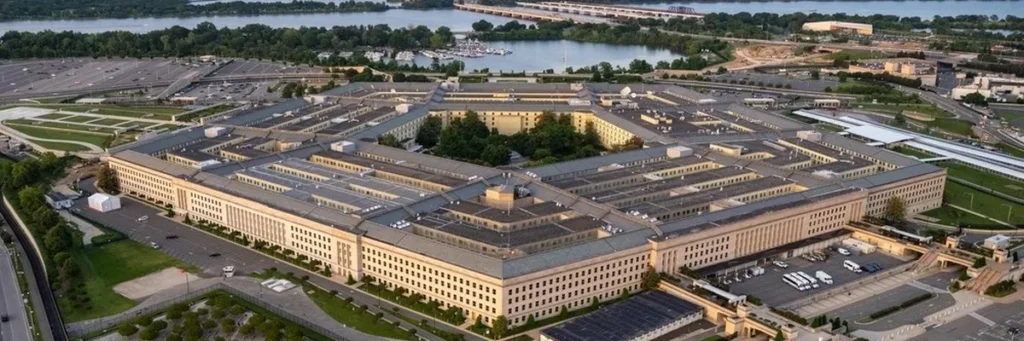
The United States category details a dense, highly documented lineage of defense-oriented threat identification programs.
The Non-US Americas sector showcases nations, particularly in South America, known for exemplary transparency and robust military-civilian aviation collaboration.
In Europe, the archives cover pioneering national space agencies and defense ministries with decades of formal, rigorous public reporting.
The Rest of World category aggregates the investigative efforts, declassified files, and official task forces from nations across Asia, Africa, and Oceania.
Submit your UAP Material
Do you know of an interesting and important research paper or other UAP related material, fill out the form below and we’ll review your material for potential inclusion into our database.