

Home » UAP News and Intelligence » Historic UAP News
Historic UAP News Archive: Legacy Reporting and Documented Encounters
Preserving Decades of Global UAP Journalism & Historical Press Records
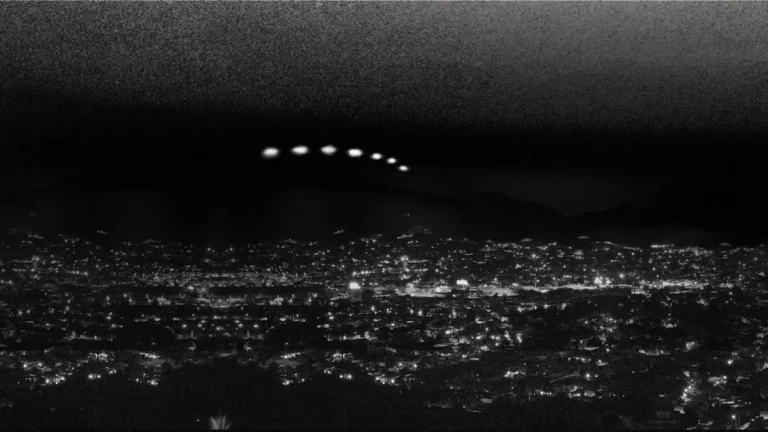
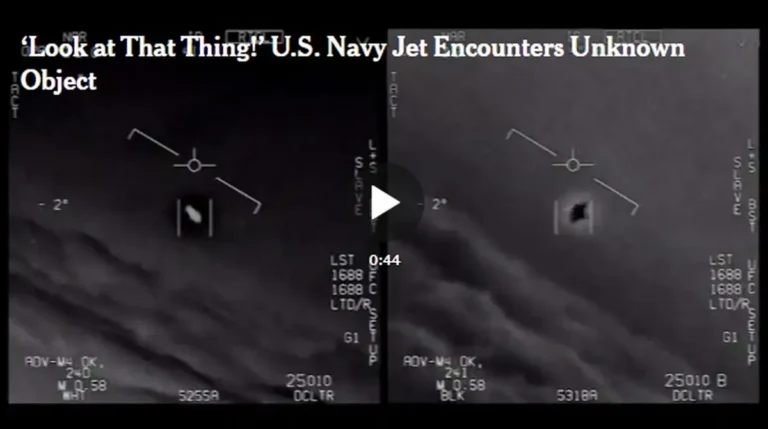
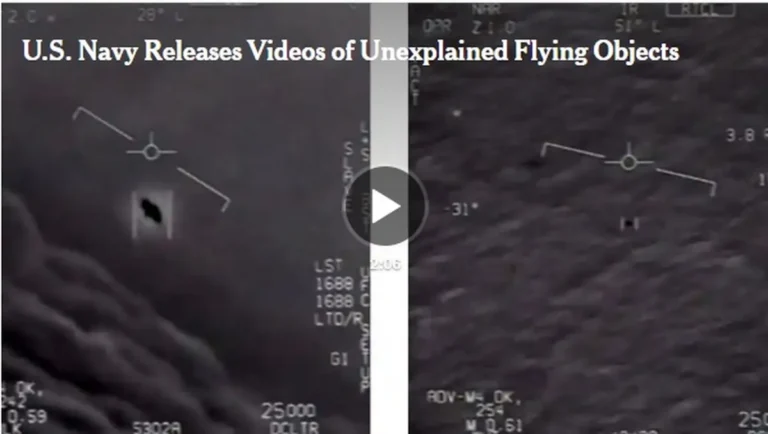
The story of Unidentified Anomalous Phenomena did not begin with recent congressional hearings; it is built on decades of frontline journalism, official press statements, and investigative reporting. This historic UAP news archive serves as a curated research repository documenting the media coverage of the phenomenon.
To facilitate historical research, our archive organizes decades of historical UFO media coverage into defined historical epochs and thematic event types. Researchers can trace the shifting narrative across distinct eras—beginning with the front-page headlines of The Early Nuclear Age & Blue Book Era, through the dismissive reporting of The Post-Condon & Stigma Era, into The Pre-Disclosure Digital Age, and arriving at The Modern Disclosure Era. Each cataloged entry retains its original publication date, journalist attribution, and primary source citation, allowing you to examine how reporting standards, public sentiment, and official transparency evolved over time.
Use this directory to explore landmark UAP press coverage across four critical categories: documented civilian and military sightings, official government actions and legislative inquiries, rigorous scientific analyses, and groundbreaking investigative exposés. Whether you are analyzing original reporting on mid-century military flaps, tracking the declassification of legacy records, or studying the journalistic breakthroughs that led to modern transparency initiatives, this collection provides the verified historical foundation necessary to contextualize current disclosure intelligence.
Browse the curated articles below by epoch or event type to explore the original record as it unfolded in real time.
Browse UAP News by Era
Browse UAP News by Event Type
Our Complete List of Historic UAP News Articles
Click on images below for more information on specific articles
Database Last Updated:
September 9, 2026Visit the Historic UAP New Archive by Era
Historic UAP News FAQ
What were Project Sign, Project Grudge, and Project Blue Book, and where can their historical records be viewed?
Between 1947 and 1969, the United States Air Force conducted three sequential official investigations into unidentified aerial phenomena:
Project Sign (1947–1949): Initiated following Kenneth Arnold’s sighting and the Roswell incident; early personnel authored the classified “Estimate of the Situation.”
Project Grudge (1949–1951): Replaced Sign with a mandate largely focused on debunking sightings.
Project Blue Book (1952–1969): Headquartered at Wright-Patterson Air Force Base, Blue Book investigated 12,618 reported sightings, leaving 701 officially categorized as “unidentified.”
Today, the entire Project Blue Book declassified case files archive is preserved at the National Archives and Records Administration (NARA) under Record Group 341, and is accessible online through the NARA catalog, Fold3, and university historical repositories.
Of course, our Historic UAP News Archive above carries articles on each of these programs
Why was the 1952 Washington, D.C. "flyover" a turning point in historical UAP news coverage?
Over consecutive weekends in July 1952, multiple unidentified radar targets and visual glowing objects violated restricted airspace directly over the White House, the U.S. Capitol, and Andrews Air Force Base. Fighter jets were scrambled, and air traffic controllers at Washington National Airport tracked rapid acceleration and abrupt directional changes.
The event made front-page headlines across the globe. On July 29, 1952, Major General John Samford held the largest Pentagon press conference since World War II to calm national hysteria, attributing the radar returns to temperature inversions. The national security concerns sparked by this incident directly led to the establishment of the CIA’s 1953 Robertson Panel.
What do historical records report about UAP incidents near nuclear weapons facilities?
Declassified military logs, witness testimonies from missile launch officers, and declassified Air Force teletypes document recurring UAP incursions near strategic nuclear facilities during the Cold War.
Among the most thoroughly documented cases is the March 1967 incident at Malmstrom Air Force Base in Montana, where launch crews at Echo and Oscar Flights reported glowing red, saucer-shaped objects hovering near silo perimeters while multiple Minuteman intercontinental ballistic missiles sequentially went off-alert status (NO-GO). Similar historical incidents have been logged at Minot AFB (1968) and Loring AFB (1975).
What was the Condon Committee, and how did its conclusions impact official UAP research?
Commissioned by the U.S. Air Force in 1966 and conducted by the University of Colorado under physicist Dr. Edward Condon, the Scientific Study of Unidentified Flying Objects (commonly known as the Condon Report) was a 1,485-page scientific review published in 1968.
The committee concluded that 21 years of UFO research had yielded nothing of scientific value and recommended terminating Project Blue Book. However, the report remains historically controversial: internal memos (such as the “Low Memo”) indicated predetermined conclusions prior to completing field investigations, and several case studies within the report itself conceded that a significant percentage of well-documented cases remained completely unexplained.
How did official military terminology evolve from "flying saucers" to "UFO" and "UAP"?
“Flying Saucers” (1947): Coined by print media following Kenneth Arnold’s description of crescent-shaped objects moving “like a saucer skipping across water” over Mount Rainier.
“Unidentified Flying Object” / UFO (early 1950s): Introduced by Captain Edward J. Ruppelt, the first director of Project Blue Book, to replace sensational tabloid language with an objective, neutral operational term.
“Unidentified Aerial / Anomalous Phenomena” / UAP (early 2000s–Present): Adopted across military and scientific bodies (such as AARO and NASA) to shed historical cultural stigma and to account for transmedium objects capable of operating seamlessly across air, space, and maritime domains.
What is the historical significance of the 1980 Rendlesham Forest incident?
Often referred to as “Britain’s Roswell,” the December 1980 Rendlesham Forest incident involved repeated sightings of anomalous, triangular craft outside RAF Woodbridge and RAF Bentwaters—bases leased to the USAF that reportedly housed tactical nuclear weapons.
Unlike many civilian sightings, the event is documented by official military records, including the contemporaneous audio recording and written memorandum submitted by Deputy Base Commander Lt. Col. Charles Halt to the UK Ministry of Defence (MoD). Declassified MoD files also record radiation readings taken at triangular ground depressions that significantly exceeded normal background levels.
More Detailed UAP Information
Additions Welcome
If you have published (or found online) meaningful UAP material that you feel belongs in our database, please submit it via the form below. We’ll review your submission and consider it for inclusion in our repository.