Home » Policy and Governance » Classification Systems » The Inventory of Nonordinary Experiences (INOE)
The Inventory of Nonordinary Experiences (INOE)
What it Does
The Inventory of Nonordinary Experiences (INOE) is a validated psychological tool that measures both the phenomenological features and the cognitive appraisal of unusual or extraordinary experiences, enabling cross‑cultural and cross‑disciplinary research
Description
Purpose and Design
The INOE was developed to address a gap in research on non-ordinary experiences (NOEs) — events such as out‑of‑body experiences, extrasensory perception, sensing a presence, or other unusual phenomena — by separating the raw experience from how it is interpreted. This dual focus allows investigators to study:
- Etic (universal) aspects: the phenomenology of the experience itself.
- Emic (culture‑specific) aspects: how individuals appraise and integrate the event within their cultural and personal context journals.plos.org.
The inventory was validated in both the United States and India using the Response Process Evaluation (RPE) method, ensuring items were understood as intended in different languages and cultural settings pmc.ncbi.nlm.nih.gov+1.
Structure
The INOE is a 47‑item questionnaire that:
- Describes the experience (e.g., sensory details, context, duration).
- Captures appraisal (e.g., religious, spiritual, paranormal, or pathological interpretation).
- Assesses outcomes (e.g., immediate emotional impact, long‑term personal growth) Neuroscience News+1.
Key Research Findings
Recent large‑scale studies using the INOE have revealed:
- Prevalence: Many people report NOEs during fully alert, everyday states; 57% were awake and alert, 39% alone Neuroscience News+1.
- Immediate vs. long‑term impact: ~25% report initial discomfort, but 51% report positive long‑term growth and insight Neuroscience News+1.
- Appraisal matters: How an individual interprets and integrates the event is the main driver of psychological outcome, not the experience itself Neuroscience News+1.
- Clinical implications: Features overlapping with psychosis or dissociation are common in non‑clinical populations and do not necessarily indicate mental illness Neuroscience News+1.
Applications
The INOE is used in:
- Cross‑cultural psychology to compare how different societies perceive and value unusual experiences journals.plos.org.
- Religious and spiritual studies to explore meaning‑making in NOEs.
- Parapsychology and neuroscience to investigate the phenomenology and appraisal of extraordinary events.
- Clinical research to distinguish between pathological and non‑pathological experiences.
In summary, the INOE offers a structured, culturally sensitive way to study unusual experiences, separating what happened from how it is understood, and has shown that interpretation — not just the event — shapes its impact on life
History and Comments
The Inventory of Non-ordinary Experiences (INOE) was developed by Ann Taves and colleagues at the University of California, Santa Barbara, as part of a research program funded by the John Templeton Foundation between 2019 and 2021 The project aimed to study the distribution, frequency, and cultural appraisal of experiences that people mark as “non-ordinary” — such as out-of-body experiences, profound joy, lucid dreaming, or perceived supernatural events — in multi-religious contexts like the U.S. and India.
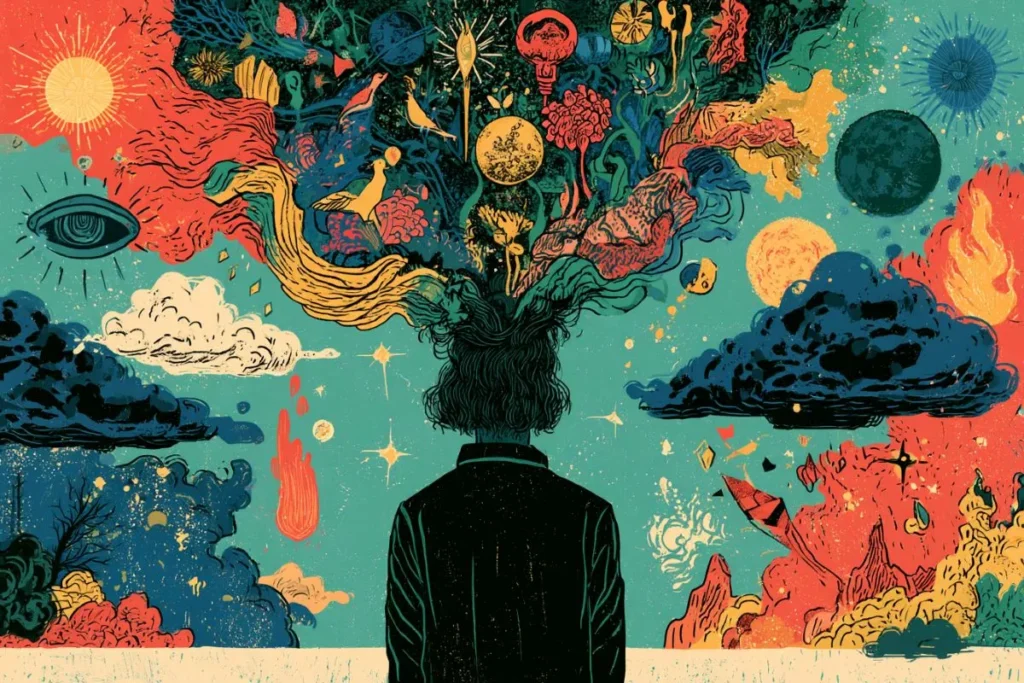
Image Credit: NeuroscienceNews.com
More UAP and SETI classifications and protocols of this type